Neskeb operates a manufacturing facility located in Rajkot Gujarat accredited with ISO 9001:2015. With focus on growth, we have established a facility equipped with manufacturing and testing facilities to maintain the highest standards of quality and safety. We pride ourselves on being well-equipped with manufacturing and testing facilities for the entire range of our products, meeting quality standards.
We deliver exceptional quality and customized solutions tailored to our customers’ needs, driven by innovation, precision engineering, and customer satisfaction. Our innovative solutions and reputation for quality has helped us to build strong and lasting partnerships with our customers. We are committed to continuous improvement and maintain certification to the requirements of IS standards.
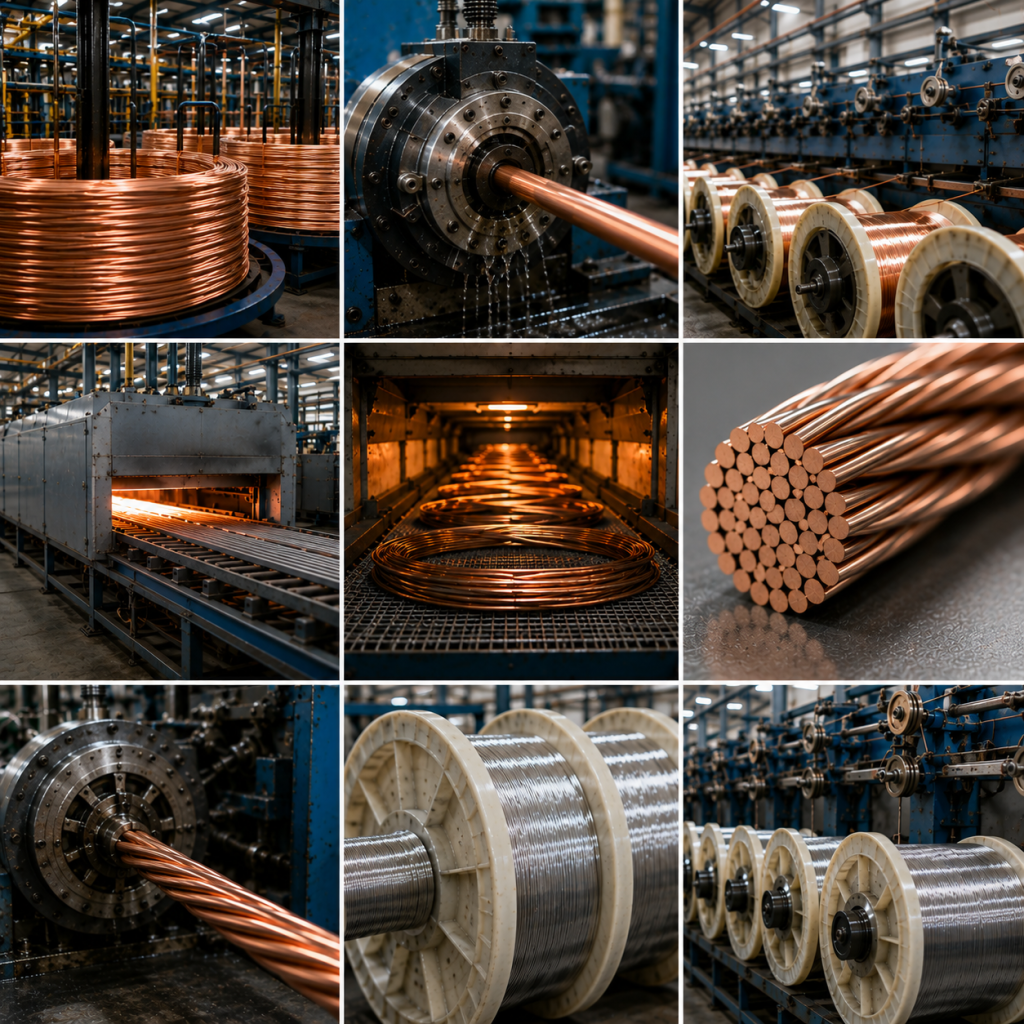
We have in-house copper/aluminum drawing, annealing, and plating facilities for manufacturing high-quality, customized conductive materials. This integrated approach allows for strict control over the wire diameter, material ductility, and surface quality.
Rod Breakdown & Wire Drawing: copper/aluminum rods are reduced in diameter through dies, with capabilities ranging from medium to fine wire drawing.
Precision Reduction: The capability to draw copper and aluminum to specific, often microscopic, diameters.
Multi-wire Production: Utilization of modern drawing machines that can produce multiple wire strands simultaneously to increase efficiency.
Multi-pass Process: The ability to move wire through multiple drawing dies to reduce the diameter.
Annealing Capabilities – A heat-treatment process that restores its ductility and softness, reversing the brittleness caused by work-hardening, bending, or shaping. Utilizing protective atmospheres in ovens to prevent oxidation, resulting in bright, clean, and flexible wire without black scale.
Stranding & Bunching:Copper stranding and bunching are processes used to twist multiple thin copper wires into a single, flexible conductor. Stranding typically uses a structured, helical pattern for larger wires, enhancing durability, while bunching twists strands together randomly in one direction for high flexibility at a lower cost. Both improve performance over solid wire.
Plating: Tin plating is applied to enhance corrosion resistance and solderability.
From Size 0.175 mm up to 4.0 mm
*From Size 0.50 mm to 4.0 mm
Direct oversight of the entire proces from raw material drawing to final surface plating ensures consistency.
Ability to create custom, precise wire diameters to meet unique client needs.
In-house annealing ensures that copper and aluminum retain high electrical conductivity, while plating provides the necessary surface finish
Integrated facilities reduce logistics and handling time, allowing for faster turnaround on orders.
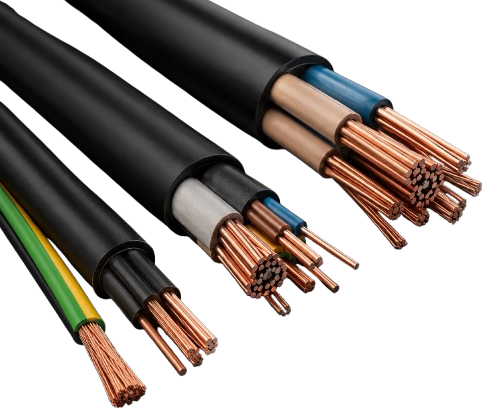
Cable jacketing materials protect internal conductors from environmental, chemical, and mechanical damage. Jackets/Sheathing provide mechanical protection to the insulation and conductor core. In order to provide the best possible protection for the cable, a jacket can be modified by the addition of fillers, plasticizers, activators, and inhibitors to enhance a particular physical characteristic. Neskeb has facilities for extrusion of many different types of both thermoplastic and thermoset jackets, and the options listed below are only a small array of the choices one has with cable jacket types.
We specialize in producing a wide variety of custom cables. Our advanced manufacturing processes ensure consistent quality, durability, and performance across all products. Cable construction involves conductors, cable arrangement, and insulation and finish covering. We offer the following options of construction in our cables.
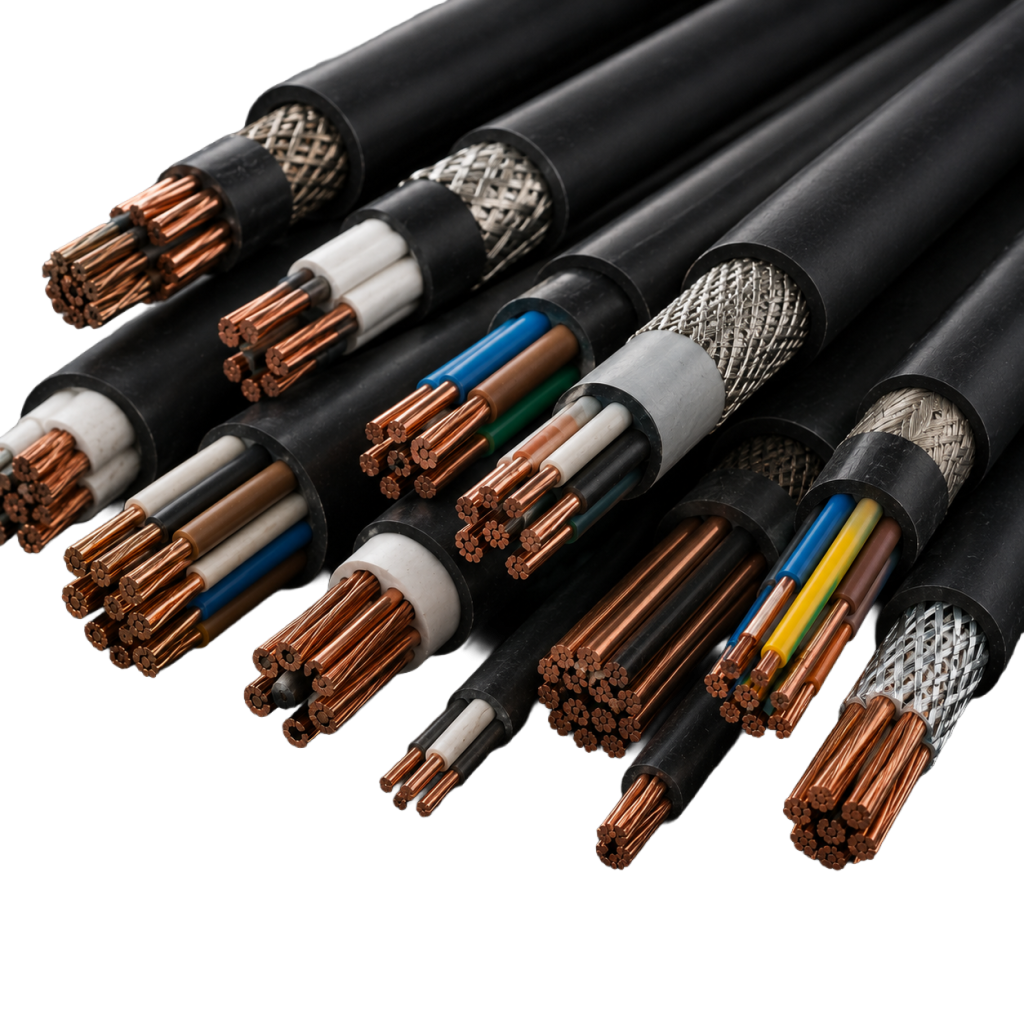
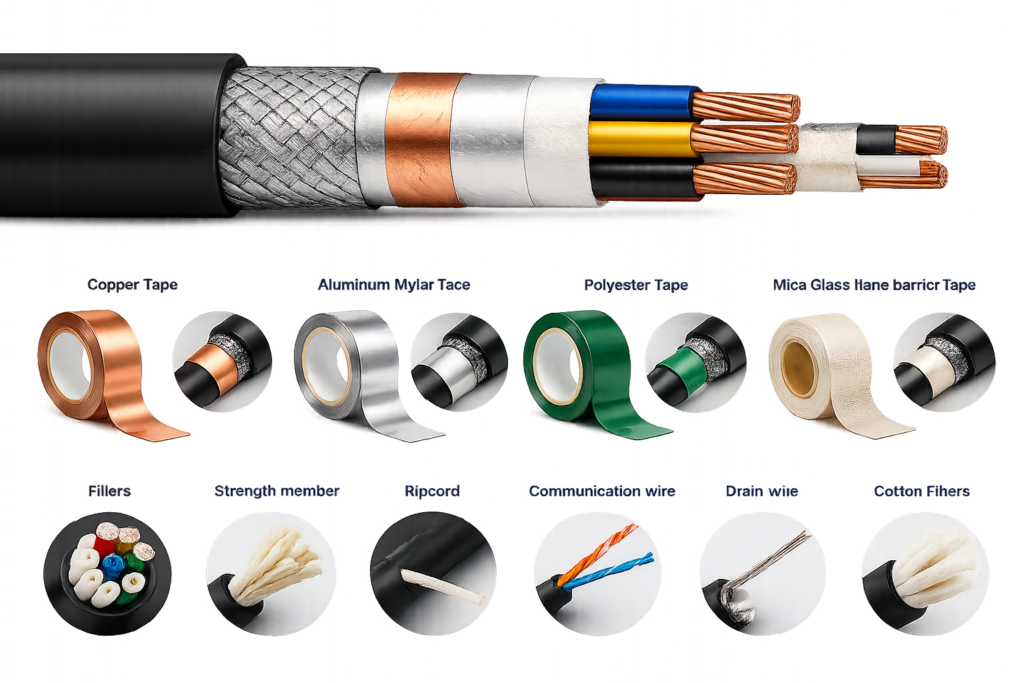
A shield, or screen, is a metallic layer placed over one or more insulated conductors to either protect them from, or prevent them causing electrical interference. Tapes, or binders, and fillers are applied to improve flexibility or roundness of the cable, to protect the insulation or sheath, or to ease production.
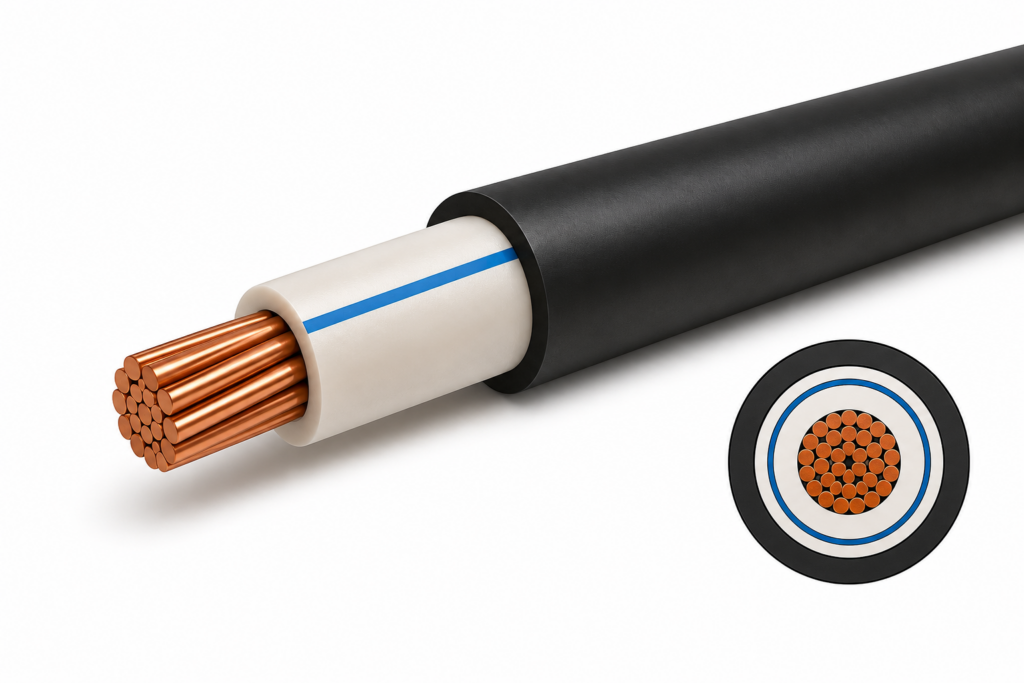
The cable extrusion process can be defined as the primary manufacturing process associated with insulated cables and wires. It incorporates the continuous application of pressure and heat to mold the polymer into a form that can insulate dielectric material around a conductive core. Melting polymer also gives additional properties. This extrusion process uses an extruder, a machine that melts and combines the raw material, which in most cases is some form of thermoplastic or thermosetting polymer. The extruder heats the raw materials and pushes them through a die, forming them into profiles aimed at cables and wires. The other parts of the extrusion line, for instance, the hopper, barrel, screw, and die, are also crucial as they assist in regulating the process of extrusion, as well as ensuring that the consistency and quality of the produced material are up to standards. The cable extrusion technology is widely used in the wire and cable industry as it enhances the ability to manufacture cables that come in different sizes, shapes, types of insulation, and performance characteristics. It also meets its aim of serving various purposes.
tight/pressure extrusion
Tubed extrusion
Skin Coated
Lining/Striping
Over-jacket extrusion
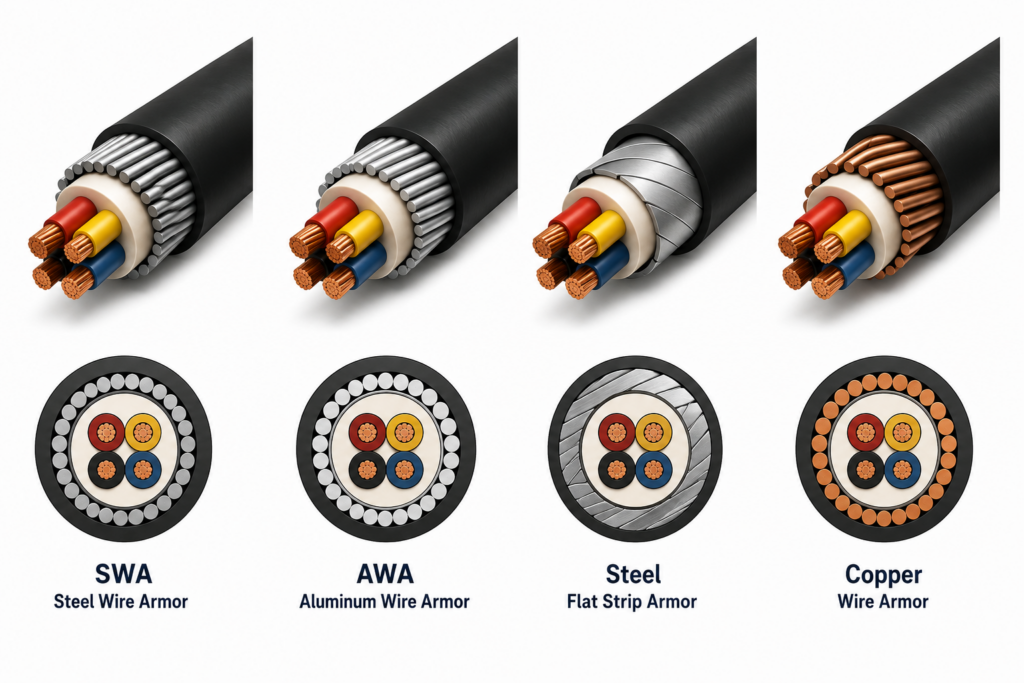
A Cable Armoring Wire is a metal cover usually applied in form of wire or formed wire, intended to protect the cable from mechanical damage. Its an additional layer of protection, typically made of metal, to safeguard it from damage caused by external mechanical forces, chemical corrosion, or other environmental factors. In simple words, an electric cable has a metal protective covering. Adding a mechanical protection layer to the cable structure enhances its strength and improves corrosion resistance.
SWA steel wire armor
AWA Aluminum wire armor
Steel Flat strip armor
Copper Wire Armor
Electrical safety is always a top priority in industrial, commercial, and residential environments. Correctly identifying the type of cable plays a critical role in ensuring safety, regulatory compliance, and preventing electrical hazards. Cable markings help engineers, electricians, and maintenance teams manage wiring systems more efficiently while minimizing the risk of accidents. If cables are not properly identified, they can lead to confusion, mistakes, and potential dangers.
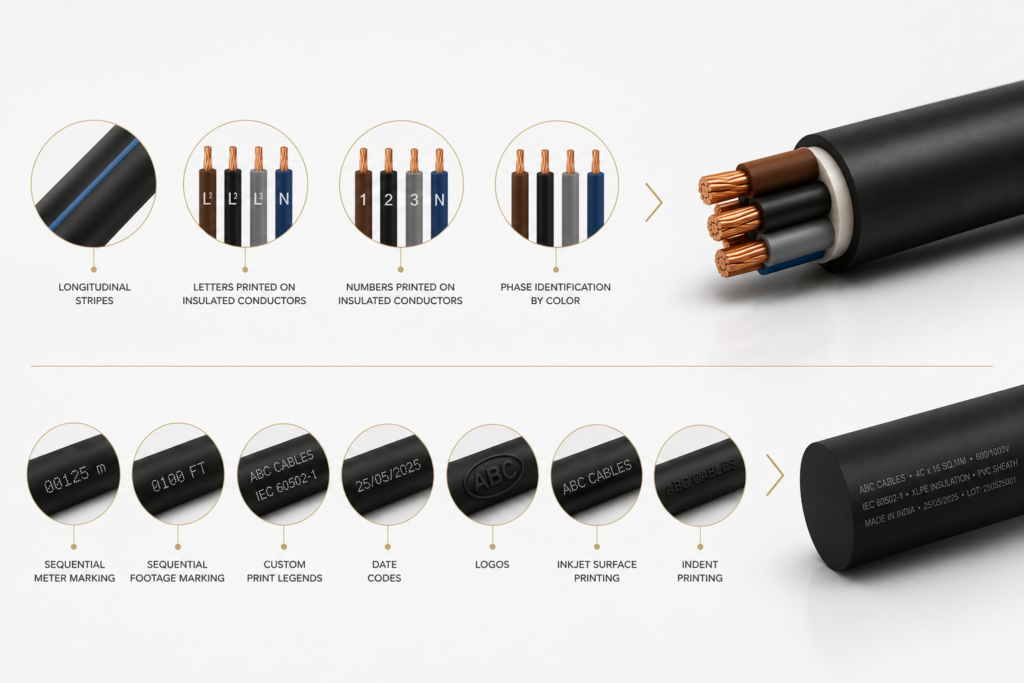
Manufacturers print specific data on the outer sheath of cables to detail their characteristics like Manufacturer and Product Line, Number of Cores and Cross-Section, Voltage Rating, Standards/Compliance, Cable construction details, Material/Application. Conductors are identified by color to distinguish between phase, neutral, and ground.
Custom jacket colors
Custom insulation colors
Longitudinal stripes
number printed on insulated conductors
Letters printed on insulated conductors
Sequential meter marking
Sequential footage marking
Color matching to standards
Private labeling
Custom print legends
Date codes
Threads
Logos and graphics
Inkjet surface Printing
Indent printing
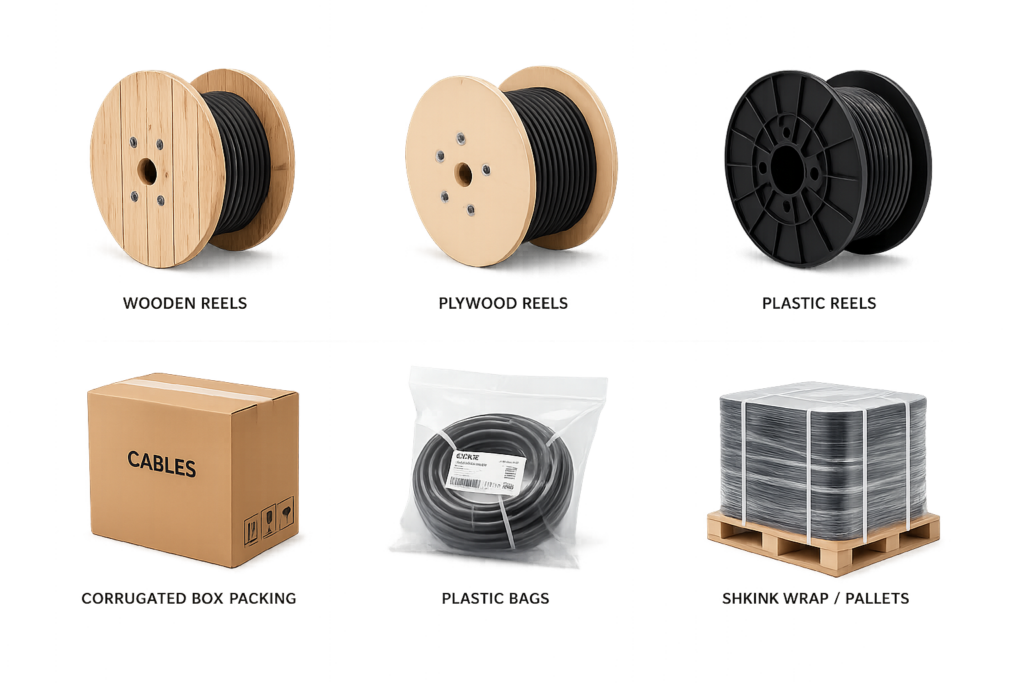
Wire and cable packaging protects products from moisture, damage, and entanglement during transit, utilizing materials like sturdy corrugated cardboard, wooden/plastic reels, and protective wrapping. Common formats include coils, spools, and barrel packs designed for easy, damage-free installation, often featuring custom branding and recyclable materials for industrial or retail applications.
Wooden reels
Plywood reels
Plastic reels
Corrugated Box packing
plastic bags
Shrink Wrap/Pallets
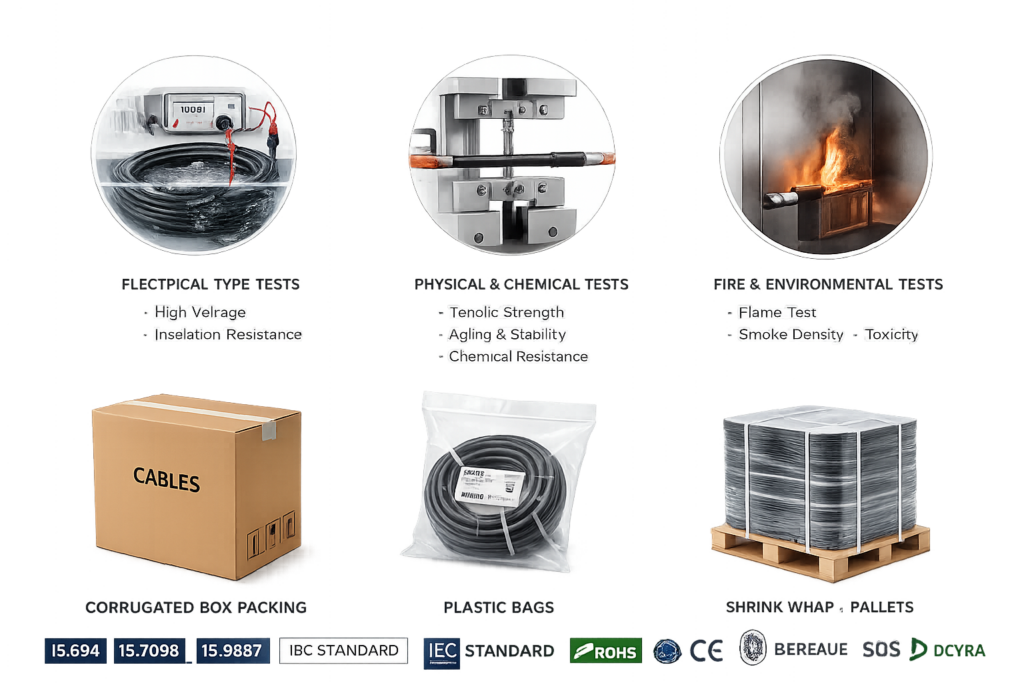
Cable type testing and approval involve rigorous destructive testing on sample cables to verify design and material compliance with standards (e.g., IEC 60502-1). Type tests—including fire resistance, smoke density, and electrical endurance—ensure long-term performance, while separate Routine Tests check every manufactured unit for safety. Key Type Test Categories & Procedures includes Electrical Type Tests, Physical & Chemical Tests, Fire & Environmental Tests etc.
Common Type Approval Standards includes
IS 694
IS 7098
IS 9857
IEC STANDARD
BS STANDARD
KUCAS
SASO
AS/NZS
RoHS
REACH
ISO 9001:2015
CE Certified
BUREAU VERITAS
INTERTEK
SGS
DEKRA